The Marvel of Spilanthes: A Comprehensive Guide to Acmella oleracea
Few plants make an introduction quite like Spilanthes.
Originally published June 6, 2024. Substantially updated July 2026.
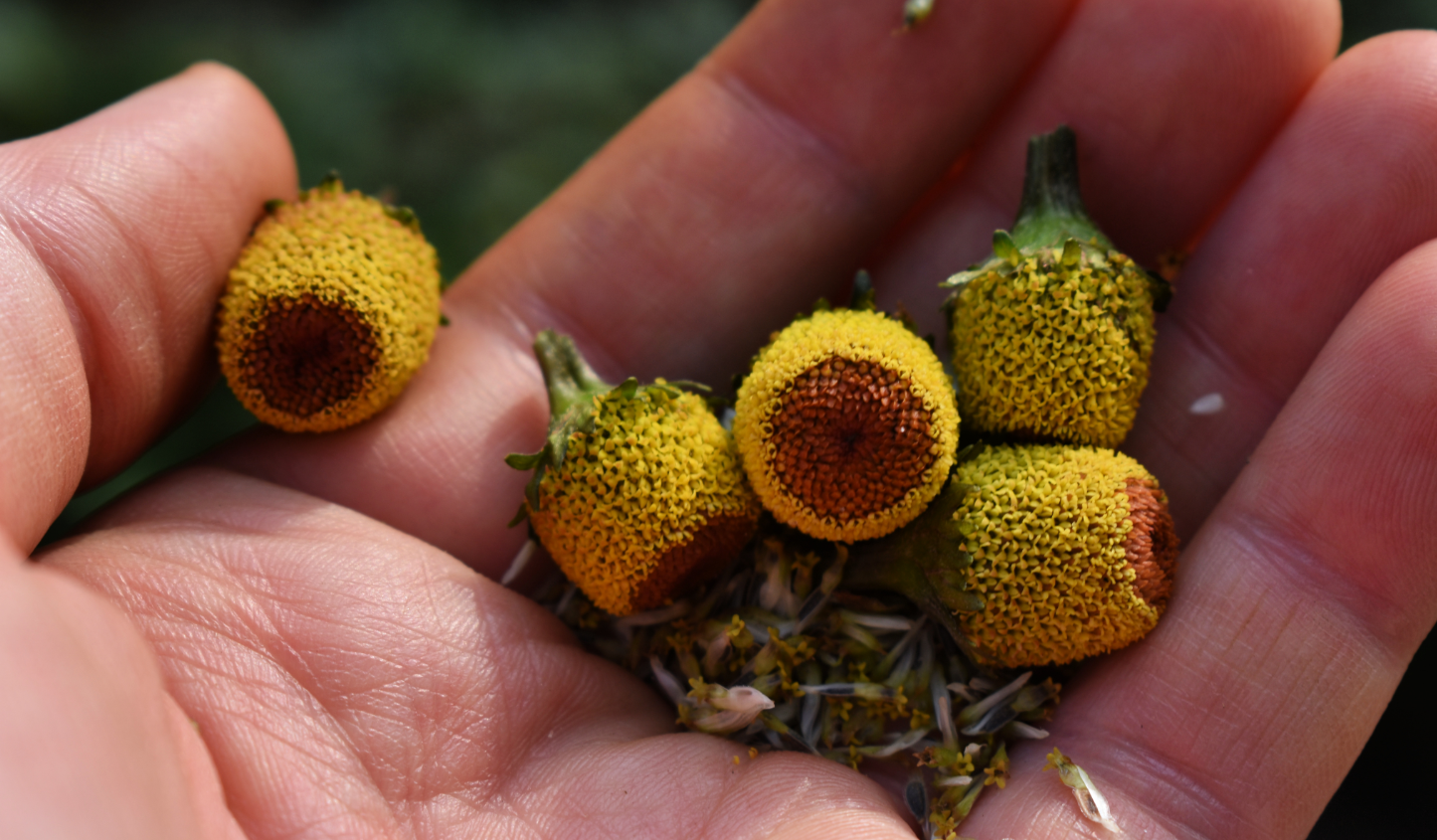
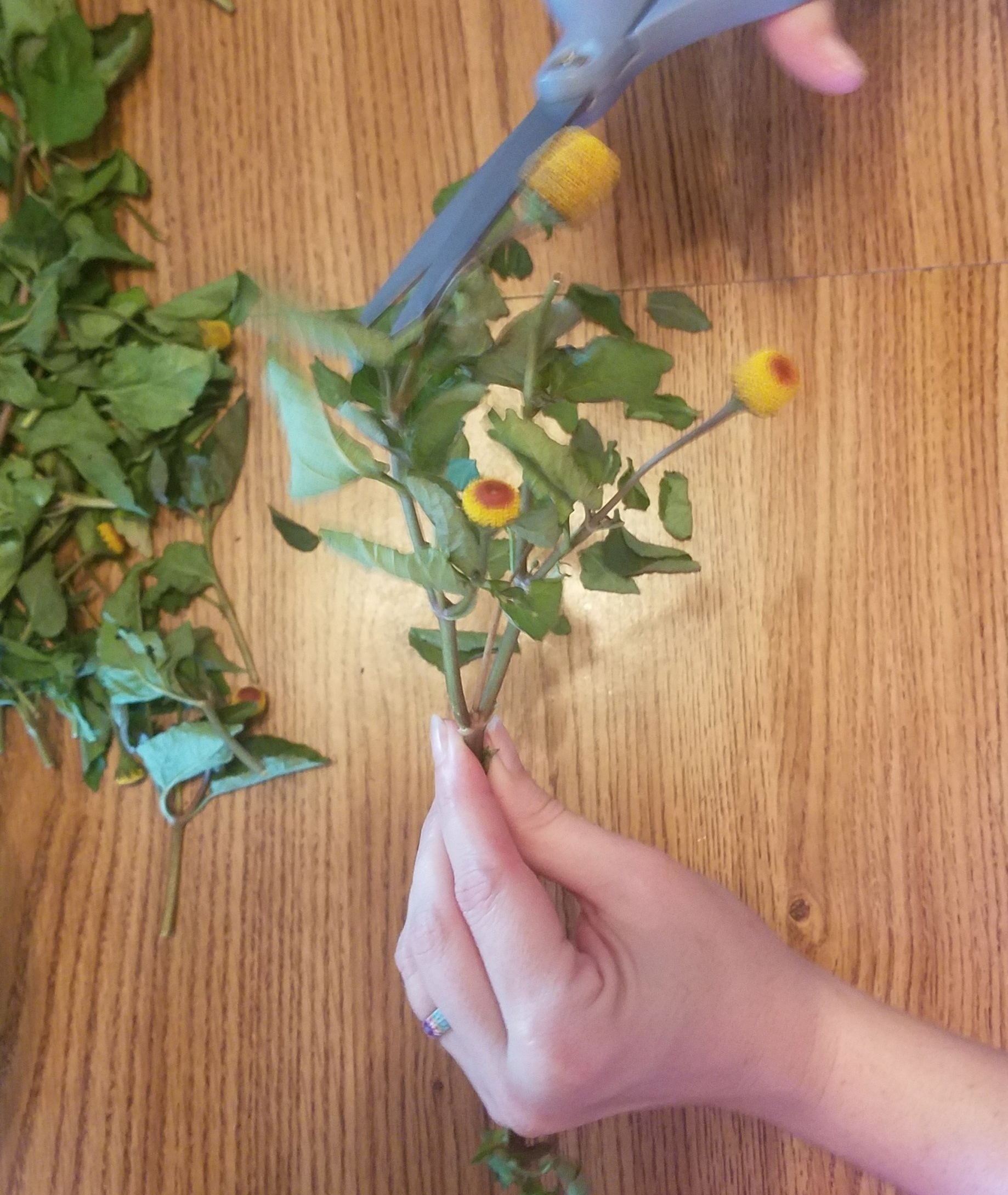
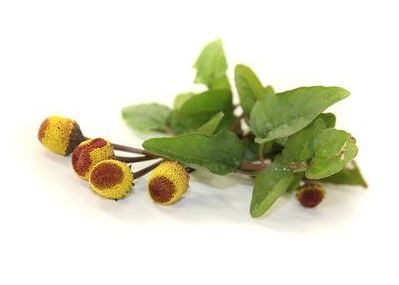
At first glance, it is a cheerful little herb with green leaves and unusual golden flower heads - often marked with a deep reddish-brown center that makes them resemble tiny eyeballs. Take one small bite of a fresh flower, however, and Spilanthes becomes unforgettable.
Within moments, your mouth may begin to tingle, buzz, warm, cool, water, and temporarily feel numb. It is an unusual sensory experience that has earned the plant names such as toothache plant, buzz buttons, electric daisy, paracress, jambu, eyeball plant, and even the Botox plant.
That surprising sensation is only one part of the Spilanthes story.
The plant has been used as food, featured in traditional herbal practices, studied for several biological activities, explored as a cosmetic ingredient, and investigated as a possible source of plant-based pest-control compounds.
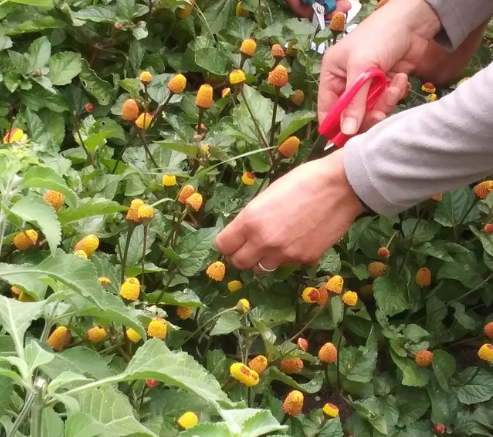
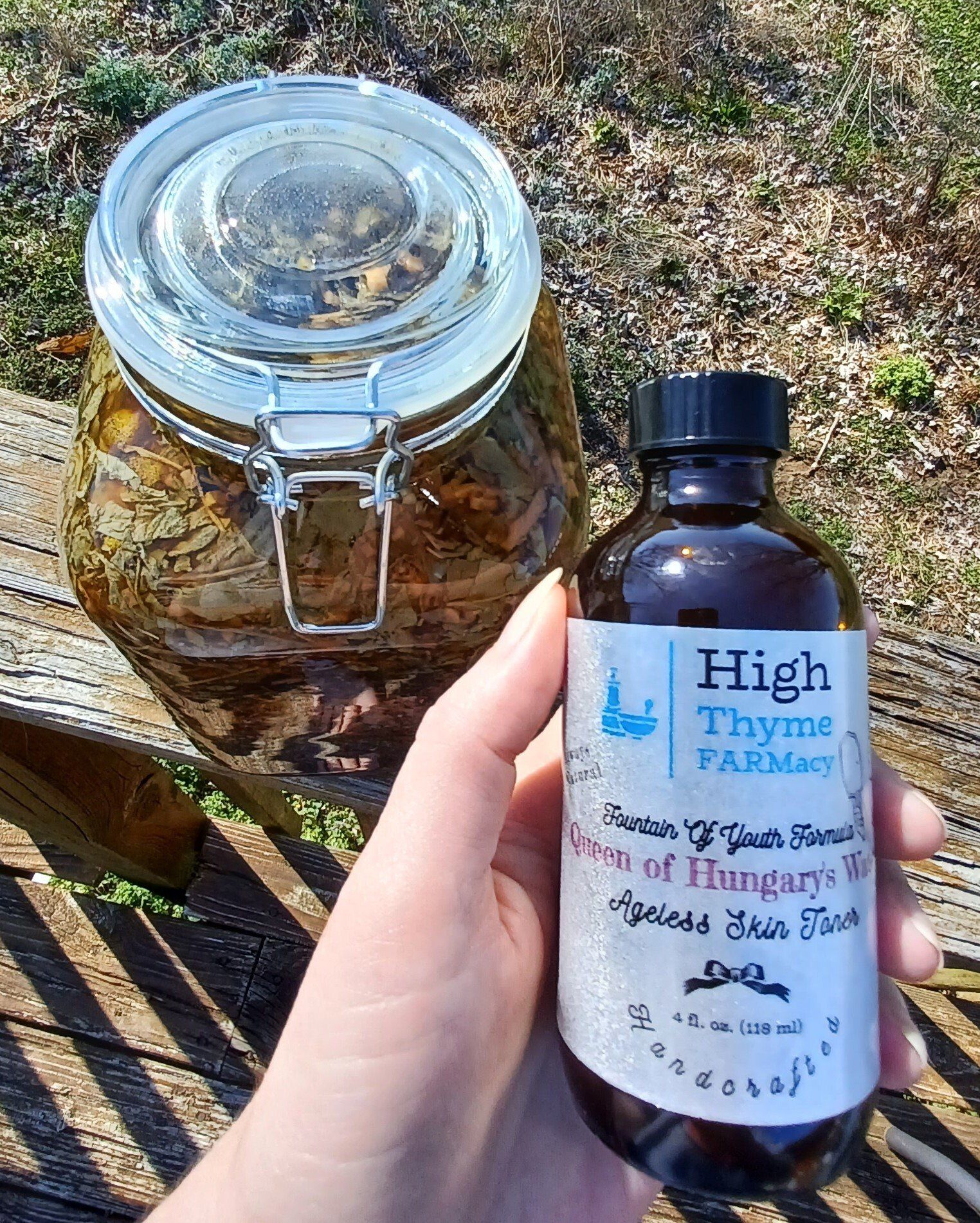
At High Thyme FARMacy, Spilanthes is especially meaningful because we do not simply purchase it as a premade cosmetic ingredient. We grow the plant ourselves, harvest its flowers and leaves, carefully dehydrate them, prepare whole-herb infusions, and use those infusions in our Fountain of Youth skincare collection.
The more time we spend with this remarkable plant, the more there is to learn.
First, What Is the Correct Botanical Name?
This is more complicated than it might appear.
The plant we grow at High Thyme FARMacy is botanically known as Acmella oleracea. It belongs to the Asteraceae family, which also includes daisies and sunflowers.
The Royal Botanic Gardens, Kew recognizes Acmella oleracea as the accepted name for this cultivated species and describes it as an annual cultigen associated with southeastern Brazil. Kew lists the older name Spilanthes oleracea as a botanical synonym.
The name Spilanthes acmella appears frequently in herbal writing, commercial descriptions, and scientific literature. However, modern botanical databases do not treat every plant historically called Spilanthes acmella as identical to Acmella oleracea. Some older names have been reassigned to different accepted species.
That does not mean every older Spilanthes study is useless. It means the botanical identity of the plant used in each study matters.
Throughout this article, we use Spilanthes as the familiar common name and Acmella oleracea when referring specifically to the plant we grow.
This naming confusion deserves a much deeper discussion, and it will eventually have its own article in our Spilanthes & Paracress Research Library.
Where Does Spilanthes Come From?
Acmella oleracea is strongly associated with Brazil, where it is commonly known as jambu. It has become especially important in the food traditions of northern Brazil and is now cultivated in many tropical and subtropical regions.
The plant’s leaves and flower heads are edible. Depending on the amount used, the flavor may be described as:
- Green or grassy
- Peppery
- Herbal
- Slightly bitter
- Pungent
- Tingling
- Numbing
- Mouth-watering
Spilanthes is used as a vegetable, seasoning, garnish, novelty food, and cocktail ingredient. The famous “buzz button” experience has introduced many people to the plant through restaurants and mixology rather than herbalism.
At High Thyme FARMacy, sharing a fresh Spilanthes flower with visitors has long been one of our favorite ways to introduce the plant. The expression on someone’s face when the tingling begins is almost always entertaining.
What Makes Spilanthes Tingle?
The plant’s famous sensation is associated primarily with a group of naturally occurring compounds known as N-alkylamides.
The best known of these is spilanthol.
Spilanthol is found in the flowers and other parts of Acmella oleracea. It is largely responsible for the plant’s characteristic pungency, tingling, salivation, and temporary numbing sensation.
Researchers have studied how Spilanthes alkylamides interact with sensory pathways, including receptors involved in heat, irritation, and pain perception. The results are complex. In one animal study, an alkylamide-rich fraction from Acmella oleracea flowers produced different sensory effects depending on the dose and experimental conditions. Lower amounts demonstrated local antinociceptive activity, while higher amounts could provoke sensation through other pathways.
That helps explain why people may experience the plant differently. One person may describe it as pleasantly tingly and cooling, while another may experience intense buzzing, heat, numbness, or overwhelming salivation.
It also illustrates an important lesson about herbal research:
A plant compound can have different and sometimes seemingly opposite effects depending on its concentration, preparation, route of use, and the biological model being studied.
Is Spilanthol the Only Important Compound?
Spilanthol receives the most attention, but it is not the plant’s only constituent.
Researchers have identified numerous compounds in Acmella oleracea, including:
- Other alkylamides
- Phenolic compounds
- Flavonoids
- Terpenes and terpenoids
- Sterols
- Fatty acids
- Pigments and other plant constituents
The chemical profile also varies among the flowers, leaves, and stems.
A study comparing different anatomical parts of cultivated Acmella oleracea found meaningful differences in their chemical composition. In that particular analysis, the leaves contained the highest measured total phenolic and flavonoid content and the greatest in-vitro antioxidant capacity. That does not mean the leaves are universally “better” than the flower heads; the flowers remain particularly important as a source of alkylamides such as spilanthol. It means different parts of the plant may contribute different constituents to a preparation.
Other factors may also influence the finished chemical profile:
- Plant genetics and botanical identity
- Soil and growing conditions
- Climate
- Plant maturity
- Harvest timing
- Which plant parts are used
- Fresh versus dried material
- Drying temperature
- Storage conditions
- Extraction solvent
- Extraction temperature and duration
- The ratio of herb to solvent
This is one reason the phrase “Spilanthes extract” does not describe one standardized substance.
A methanol extract made for laboratory testing is different from an ethanol tincture. Both are different from a water infusion, essential oil, glycol extract, isolated spilanthol, or traditional whole-herb oil infusion.
Traditional Uses of Spilanthes
Spilanthes has a long history of traditional and culinary use in several parts of the world.
Its best-known traditional association is with oral discomfort. Fresh flower heads have been chewed because their strong sensory effect can temporarily alter sensation in the mouth. This is the origin of the familiar name toothache plant.
Traditional preparations associated with Spilanthes and related Acmella species have also been used for purposes involving:
- The mouth and gums
- Salivation
- Throat discomfort
- Digestive preparations
- Fevers and seasonal illnesses
- Topical skin preparations
- Wounds
- Painful or uncomfortable areas
- Insects and parasites
- Culinary seasoning
These traditional uses help researchers identify questions worth investigating. They do not, by themselves, prove that a preparation is safe or effective for treating a disease.
A toothache, for example, may result from decay, infection, injury, or another condition requiring professional dental care. Temporary numbness does not correct the underlying problem.
Throughout this research library, we will clearly distinguish:
“Traditionally used for” from “clinically proven to treat.”
Those phrases do not mean the same thing.
What Is Modern Research Studying?
Modern research involving Acmella oleracea, plants identified as Spilanthes acmella, and the compound spilanthol covers a surprisingly wide range of subjects.
Most of that evidence remains preclinical, meaning it comes from laboratory experiments, cell cultures, chemical analyses, computer modeling, or animal studies rather than large human clinical trials.
The research is intriguing, but its limitations matter.
Pain and Sensory Research
Because of the immediate sensation produced by the plant, pain and sensory pathways are among the most logical areas of investigation.
Researchers have studied flower extracts, alkylamide-rich fractions, and isolated compounds in experimental models of nociception - the nervous system’s response to potentially harmful stimuli.
Animal studies have reported antinociceptive activity involving several possible pathways, including interactions with TRPV1 and cannabinoid-related receptors. These findings may help explain the plant’s traditional toothache reputation, but they do not yet establish Spilanthes as a proven treatment for chronic pain in humans.
The type of extract is also important. A concentrated methanol or hexane extract administered in a controlled animal experiment cannot be directly compared with chewing a flower, drinking an herbal preparation, or applying a cosmetic oil to the skin.
Inflammation Research
Spilanthol has been examined in laboratory models involving inflammatory signaling.
For example, researchers have studied its effects on signaling pathways and inflammatory mediators in stimulated human cell cultures. Those experiments help scientists investigate mechanisms, but a cell-culture result does not demonstrate that a Spilanthes product treats arthritis, eczema, psoriasis, or another inflammatory condition in people.
That distinction was missing from many early articles about the plant, including the original version of this one.
Rather than saying that Spilanthes “reduces inflammation” as a universal human benefit, the more accurate statement is:
Spilanthes and spilanthol have demonstrated anti-inflammatory activity in certain laboratory and animal models, and further research is needed to understand their possible clinical relevance.
Antimicrobial and Oral-Care Research
Extracts made from Spilanthes and related Acmella plants have shown activity against certain microorganisms in laboratory testing.
Researchers have explored possible applications involving:
- Oral bacteria
- Fungal organisms
- Skin-associated microorganisms
- Biofilms
- Wound-related applications
- Food and cosmetic preservation
A 2025 study of a methanol extract made from dried Acmella oleracea leaves examined its chemical profile and evaluated antioxidant, anti-inflammatory, antimicrobial, and wound-related activity in laboratory models. Although the findings supported continued investigation, they involved a particular concentrated methanol extract - not an ordinary tea, face oil, fresh flower, or finished High Thyme FARMacy product.
Laboratory antimicrobial activity does not make an herbal cosmetic an antibiotic, antifungal medication, wound treatment, or treatment for oral infection.
Wound-Healing Research
Traditional topical uses have encouraged scientists to study Acmella oleracea in wound-related models.
This research may examine several overlapping processes, including:
- Cell migration
- Oxidative stress
- Inflammatory signaling
- Microbial growth
- Tissue organization
- Collagen measurements
These findings are useful for developing future research questions and specialized pharmaceutical materials. They do not establish that a homemade preparation or cosmetic product should be placed on an open wound.
Our Fountain of Youth products are skincare cosmetics. They are not formulated, tested, or marketed as wound treatments.
Antioxidant Research
Different parts and extracts of Acmella oleracea have demonstrated antioxidant activity in laboratory assays.
“Antioxidant activity,” however, can mean several different things. Researchers use a variety of chemical and cellular tests, each measuring something slightly different. A high result in a laboratory antioxidant assay does not automatically translate into a specific health or skincare result in a human being.
Extraction method also matters. A compound pulled from plant material with methanol may not be present at the same level in a water infusion or oil infusion.
This is another reason scientific findings should be tied to the exact preparation studied.
Cancer-Cell Research
Spilanthol and certain Spilanthes extracts have been evaluated against cancer cells in laboratory settings.
One study, for example, examined the effects of a hydroethanolic jambu extract and isolated spilanthol on cultured human gastric cancer cells. That type of research may help identify compounds or biological pathways worthy of future pharmaceutical investigation. It does not show that eating Spilanthes, taking a tincture, or using a topical product prevents or treats cancer.
A substance’s ability to affect cultured cells in a laboratory is only an early step in a long research process. Researchers would still need to address absorption, metabolism, effective dose, selectivity, toxicity, delivery, animal evidence, and carefully controlled human trials.
For that reason, phrases such as “Spilanthes is an anticancer treatment” go far beyond what current evidence supports.
Blood-Sugar and Metabolic Research
Plant extracts have also been examined in laboratory and animal models involving glucose regulation and other metabolic measurements.
A 2025 study selected a particular plant part and solvent extract using in-vitro assays and then evaluated the chosen extract in an alloxan-induced mouse model of diabetes. Results from an experimentally induced condition in mice do not establish safety or effectiveness for diabetes management in humans.
Spilanthes should not be presented as an alternative to diabetes medication or professional medical care.
This research belongs in the scientific story of the plant, but it must remain in the correct context.
Spilanthes in Cosmetics and Skincare
Spilanthes has received growing attention from the cosmetic industry, particularly in products intended to improve the visible appearance of mature skin.
Certain standardized Acmella oleracea extracts and finished cosmetic formulas have been evaluated for effects involving:
- Skin hydration
- Surface smoothness
- Roughness
- Visible facial lines
- Skin microrelief
- The appearance of firmness
A 2021 study evaluated a finished emulsion serum containing a specific Acmella oleracea extract and reported improvements in measured wrinkle characteristics after two weeks. A later preliminary study evaluated another extract-containing glycolipid serum and reported improvements in hydration and facial skin microrelief. These findings apply to the specific extracts and finished formulas tested - not every product made with Spilanthes.
A whole-herb oil infusion is chemically different from the standardized extracts used in those studies. For that reason, we do not represent High Thyme FARMacy’s Fountain of Youth products as though those clinical studies were performed on our formulas.
We can accurately say that our products are formulated to:
- Moisturize and condition the skin
- Help soften the visible appearance of fine lines
- Improve the appearance of dryness
- Leave the skin feeling smoother and more supple
- Support a nourished, healthy-looking complexion
Claims that a cosmetic increases collagen production, changes muscle activity, treats inflammation, prevents acne, or removes wrinkles can cross from cosmetic claims into drug claims under United States law. FDA distinguishes appearance-based cosmetic claims from claims that a product affects the structure or function of the skin.
For a deeper discussion of Spilanthes in skincare, read:
Spilanthes: A “Natural Botox Alternative”?
Spilanthes in Agricultural Research
One of the most surprising areas of Spilanthes research has little to do with herbal medicine or skincare.
Scientists have investigated Acmella oleracea extracts and essential oil against insects, mites, ticks, and agricultural pests.
In one study, essential oil from Acmella oleracea was tested against mosquito larvae, moth larvae, and adult houseflies. Another study applied extracts made from the plant’s aerial parts to stored wheat in experiments involving eight arthropod pests. The results supported further investigation into possible plant-derived pest-management materials.
That does not mean placing Spilanthes in a garden will automatically prevent pests, nor does it establish that every plant preparation is safe for people, animals, pollinators, crops, or the surrounding environment.
A commercially useful botanical pesticide would still require standardized production, effectiveness testing, toxicity evaluation, environmental assessment, and regulatory review.
Why the Extraction Method Matters
One of the most important lessons in Spilanthes research is that the preparation matters as much as the plant name.
Researchers may work with:
- Fresh flowers
- Dried flowers
- Leaves
- Stems
- Roots
- Whole aerial parts
- Water extracts
- Ethanol extracts
- Methanol extracts
- Hexane extracts
- Glycol extracts
- Essential oils
- Purified alkylamides
- Isolated spilanthol
- Finished multi-ingredient formulas
Each method extracts a different chemical profile.
Water tends to capture different constituents than alcohol. Oil-soluble compounds behave differently from water-soluble compounds. A purified compound does not contain the same collection of constituents found in a whole-plant preparation.
Even two extracts made with the same solvent may differ because of plant genetics, plant part, growing conditions, harvest timing, temperature, duration, and herb-to-solvent ratio.
This is why a study involving one extract cannot automatically substantiate another.
How to Read Spilanthes Research Responsibly
When you encounter an exciting claim about Spilanthes, ask several questions:
Which species was studied?
Was it definitely Acmella oleracea, or was it another plant published under a Spilanthes name?
Which part of the plant was used?
Flowers, leaves, stems, roots, and whole aerial parts may have different chemical profiles.
How was it extracted?
A methanol extract, water infusion, essential oil, and infused carrier oil are not equivalent.
Was the study performed in a test tube, in cells, in animals, or in people?
Each represents a different level of evidence.
How concentrated was the preparation?
The amount used in a laboratory may bear little resemblance to ordinary culinary, traditional, or cosmetic use.
Was the tested formula made with other active ingredients?
When a product contains several ingredients, its results cannot automatically be credited to Spilanthes alone.
Was the research independently conducted?
Ingredient-supplier studies can provide useful information, but their commercial involvement should be acknowledged.
Has the result been repeated?
One promising experiment is not the same as a consistent body of evidence.
These questions do not diminish the plant. They allow us to appreciate it honestly.
Can You Use Spilanthes at Home?
Spilanthes is used as an edible plant in some culinary traditions, and many people grow it for the novelty of experiencing the fresh flowers.
However, culinary exposure is not the same as taking a concentrated extract.
There is no universal Spilanthes dosage that can responsibly be applied to every tincture, capsule, powder, extract, or species. A direction such as “take 10 to 20 drops” is incomplete without knowing the identity of the plant, plant part, extraction ratio, alcohol percentage, concentration, intended use, and the individual using it.
For that reason, we are not providing internal dosing instructions in this article.
People who are pregnant or breastfeeding, children, those taking medications, and those managing health conditions should seek qualified professional guidance before using concentrated herbal preparations internally.
For topical cosmetics:
- Follow the product directions.
- Patch-test a new product before regular use.
- Avoid applying ordinary cosmetics to open or infected wounds.
- Discontinue use if significant irritation develops.
- Seek medical or dental care for persistent symptoms.
A strong tingling sensation is not automatically proof that a preparation is more effective.
From Our Garden to Fountain of Youth
Our relationship with Spilanthes begins long before a finished bottle reaches the shelf.
We grow Acmella oleracea here at High Thyme FARMacy. We watch the plants develop, wait for the flower heads to mature, harvest both buttons and leaves, inspect the plant material, and carefully dehydrate it.
Once properly dried, the plant material is used to create our whole-herb oil infusions.
Drying is particularly important when botanical material will be placed into oil. Fresh plants contain water, and introducing uncontrolled moisture into an oil-based cosmetic can create stability and microbial-safety concerns.
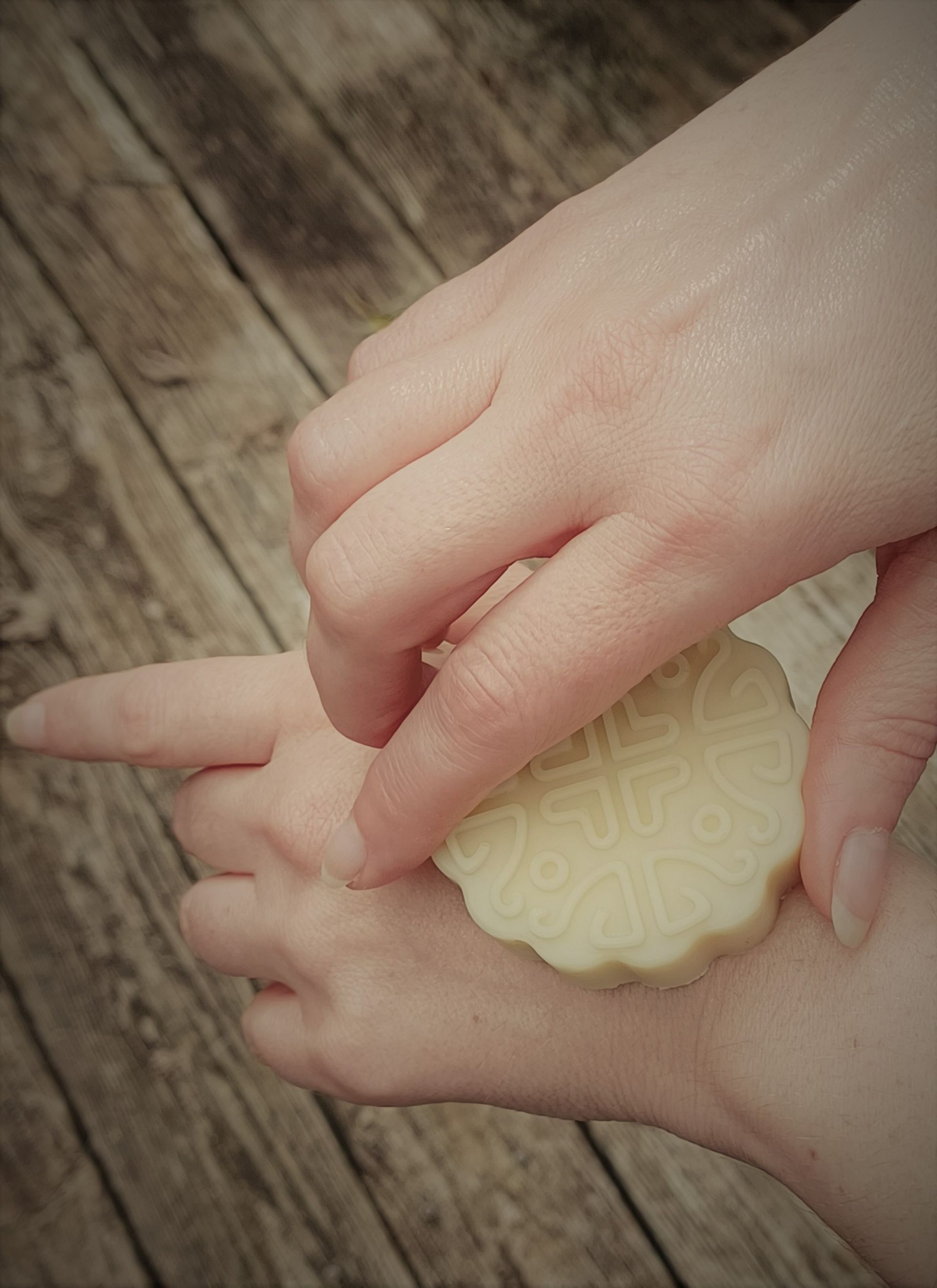
Our Fountain of Youth Firming Face Oil uses botanical carrier oils infused with Spilanthes and complementary herbs. After infusion and filtration, additional ingredients are incorporated to complete the formula.
This farm-grown approach gives us direct control over:
- The identity of the plant we use
- How it is grown
- When it is harvested
- How the flowers and leaves are handled
- How the plant material is dried
- How it is stored
- What enters our infusions
It also gives us a relationship with the plant that cannot be gained simply by ordering a bottle of extract.
We know what Spilanthes looks like as a seedling. We know how it responds to heat and rain. We know how quickly the flower heads appear during peak season. We know the difference between harvesting a few fresh buttons for visitors and filling tray after tray for dehydration.
That direct experience does not replace scientific research, but it gives our research a living, growing foundation.
What We Know and What We Still Do Not Know
Current research supports genuine scientific interest in Acmella oleracea and spilanthol.
Researchers have documented distinctive sensory properties and investigated potential activity involving pain pathways, inflammatory signaling, microorganisms, skin, wounds, metabolism, cancer cells, insects, mites, and cosmetic appearance.
At the same time:
- Many studies remain laboratory- or animal-based.
- Preparations vary considerably.
- Botanical names are not always used consistently.
- Human clinical research is limited in several areas.
- Results from isolated spilanthol may not apply to the whole plant.
- Results from concentrated extracts may not apply to traditional preparations.
- Results from one finished formula do not apply to every Spilanthes product.
- Promising research is not the same as proven medical treatment.
We believe those limitations should be discussed openly.
Spilanthes does not become less remarkable when its research is described accurately.
It becomes more trustworthy.
The Future of Spilanthes Research
Spilanthes sits at an unusual intersection of botany, food, sensory science, traditional herbal knowledge, pharmacology, cosmetics, and agriculture.
Future research may help clarify:
- How different species and varieties compare
- How growing conditions affect spilanthol levels
- Which plant parts are best suited to different preparations
- How drying and storage influence important constituents
- Which extraction methods produce consistent profiles
- How Spilanthes compounds interact with sensory receptors
- Whether promising laboratory findings translate into meaningful human applications
- Which preparations are safe at which concentrations
- How standardized extracts may be used in future cosmetic, pharmaceutical, oral-care, or agricultural products
We will continue following that research while also documenting our own experience growing, harvesting, drying, and infusing the plant.
An Extraordinary Plant Worth Studying
Spilanthes has accumulated many dramatic nicknames and an equally dramatic collection of claims.
Some are rooted in its traditional history. Some began with legitimate laboratory findings. Others have grown far beyond the available evidence as they have been repeated through commercial websites, social media, and herbal articles.
The truth is compelling enough without exaggeration.
Acmella oleracea is:
- An edible plant with an extraordinary sensory effect
- A traditional toothache herb
- A source of spilanthol and other alkylamides
- A subject of growing scientific investigation
- An emerging cosmetic ingredient
- A potential source of compounds for agricultural research
- The botanical heart of High Thyme FARMacy’s Fountain of Youth collection
For us, it is also a plant with which we have developed a deeply personal relationship... from seed to flower, from harvest tray to infusion, and ultimately from our farm to your face.
This article is only the beginning.
Our growing Spilanthes & Paracress Research Library will explore the plant’s taxonomy, chemistry, traditional uses, cultivation, extraction methods, cosmetic applications, medical research, safety considerations, and unanswered questions one subject at a time.
Because after years of growing and working with Spilanthes, we are still discovering just how marvelous this unusual little plant truly is.
Important Educational Notice
This article is intended for historical and educational purposes. It is not medical advice and is not intended to diagnose, treat, cure, or prevent any disease. Research discussed here may involve isolated compounds, concentrated extracts, laboratory experiments, animal models, or specific finished formulas. Those findings should not be assumed to apply to High Thyme FARMacy products or to ordinary home preparations.
High Thyme FARMacy’s Fountain of Youth products are cosmetics formulated to cleanse, moisturize, condition, and improve the appearance and feel of the skin.
Share
A High Thyme FARMacy Blog